Being fired is always a hard thing to go through, no matter what the reason. There are times when we just have to endure the loss of a job, of course; but when you’ve been wrongfully terminated, you should talk to a wrongful termination lawyer in Glendale, California for help. The laws of California and of the United States protect you against wrongful firing. The question is, was your termination wrongful?
From a Glendale, California Wrongful Termination Lawyer: Defining “Wrongful” in California Law
Basics to Know
Generally, wrongful termination can be defined as any time an employer fires an employee for a reason that violates federal or state law. It’s important to know that California is an at-will state when it comes to employment. This means employers can hire or fire at their will, and employees can take or leave jobs at their will. Unless there is a specific contract in place, both the employee and the employer retain the right to end their working relationship at any time and for any reason that seems good to them. The only restriction on that is that an employer may not end the relationship for an unlawful reason.
There are quite a few situations that could qualify as an unlawful termination however. These are some of the most common here in California:
Fired for Whistleblowing
If you report your employer for any violation of federal, state, or even local laws or regulations, your employer is not allowed to fire you in response. This is known as “retaliation,” and retaliation is an illegal reason to terminate employment. For example, if you were to report a health hazard at your job, and if your employer fired you immediately afterward, there’s a good chance this is a case of wrongful termination.
The same is true if you are blowing the whistle about wage law violations. If you’re making a complaint because your employer is not following the California Labor Code when it comes to overtime, unpaid meal breaks, or general unpaid wages, your employer is not allowed to fire you in retaliation. This holds true even if an investigation ultimately determines that your employer did not violate any regulations. So long as you made the complaint in good faith, believing that there was a violation or that an investigation was needed, you are protected from retaliation. The only way this could be a problem is if it can be shown that you knowingly lied in your whistleblowing complaint.
Now, the reality is that most employers are smart enough to at least try to pretend that firing an employee has nothing to do with the whistleblowing. This means they may wait for a few months after the complaint before trying to retaliate, and it’s also common for there to be a sudden uptick in complaints about you before that happens. If you’re starting to get written up for things that were never a problem before or which other employees are not being written up over, or if you are suddenly getting bad performance reviews where your performance reviews had all been fine before the whistleblowing, there is a chance that your employer is setting up the situation to make it look like you’re being fired for cause. Talk to a wrongful termination lawyer as soon as possible if you suspect this might be happening.
Fired for Breach of Contract
If you have an employment contract, then that contract provides you with certain protections, and the terms of the contract must be followed. Contracts for employment very often say, for example, that employees can only be terminated for a good reason and give precise explanations of what those reasons are. These contracts also often have procedures that must be followed. If your employer fired you for a reason not given in the contract or did not follow the procedure, this could be a wrongful termination.
For example, if your contract states that you cannot be fired unless you have been given a formal warning three times over the same offense or class of offense, and your employer fires you immediately the first time you do something like fail to show up for a shift, this would be wrongful termination. If there were no contract, your employer would be able to fire you for a reason like this if they wished to. But if there is a contract or a union agreement, the procedures delineated in it must be followed before your employment can be terminated.
Fired in Breach of “Covenant of Good Faith and Fair Dealing”
A “covenant of good faith and fair dealing” is just legal terminology that means you and your employer, in signing a contract, are both giving your implicit promise that not only will you keep the letter of the contract but also the spirit of the contract. In other words, neither of you will try to undermine the ability of the other party to fulfill their terms of the contract. Your employer, therefore, has an obligation to allow you to accomplish your duties and cannot try to interfere with this in order to create a situation where they can fire you.
For example, your employer cannot refuse to properly communicate the information you need to complete a project, and then attempt to fire you for not getting that project done “on time.” This can be difficult to prove, but if your employer has been treating you unfairly in this way to force a breach of contract so that they can find an excuse to fire you, then you may have cause for an action against your employer. Talk to a lawyer to learn more.
Fired in Discrimination
This is perhaps the most well-known case of wrongful termination: when a person in a protected class is discriminated against. Employers are not allowed to fire a worker based on personal characteristics. The personal characteristics that are protected here in California include race, color, and national origin as well as ancestry. You also cannot be fired because of your religion, your age (if you are over 40 years old), or because of military or veteran status.
California also protects your sex, marital status, genetic information, sexual orientation, and gender identity. No one can be fired because of a disability or because of their HIV status or a medical condition. Other protected classes include political affiliations, status as a victim of assault or domestic violence, and citizenship status. Various cities in California give even greater protection, so you will want to talk to a lawyer with experience in the local area to understand what all your protections might be under local laws as well as state.
Fired for Complaining of Sexual Harassment
Sexual harassment in the workplace is unfortunately quite common, and someone who complains about it cannot be fired for making that complaint. Employers are required under California law to maintain a workplace free of sexual harassment and can be reported if they’re failing to take positive steps to do this. Whether you report the sexual harassment to your employer directly or make a complaint to the state, if you’re fired for doing so, that would be wrongful termination.
This is not an exhaustive list of wrongful termination grounds in California. If you’ve been fired and suspect it may be wrongful, contact Haig B. Kazandjian Lawyers, APC now in Glendale for help anywhere in the greater LA area.
Contact Our California Employment Lawyer Today
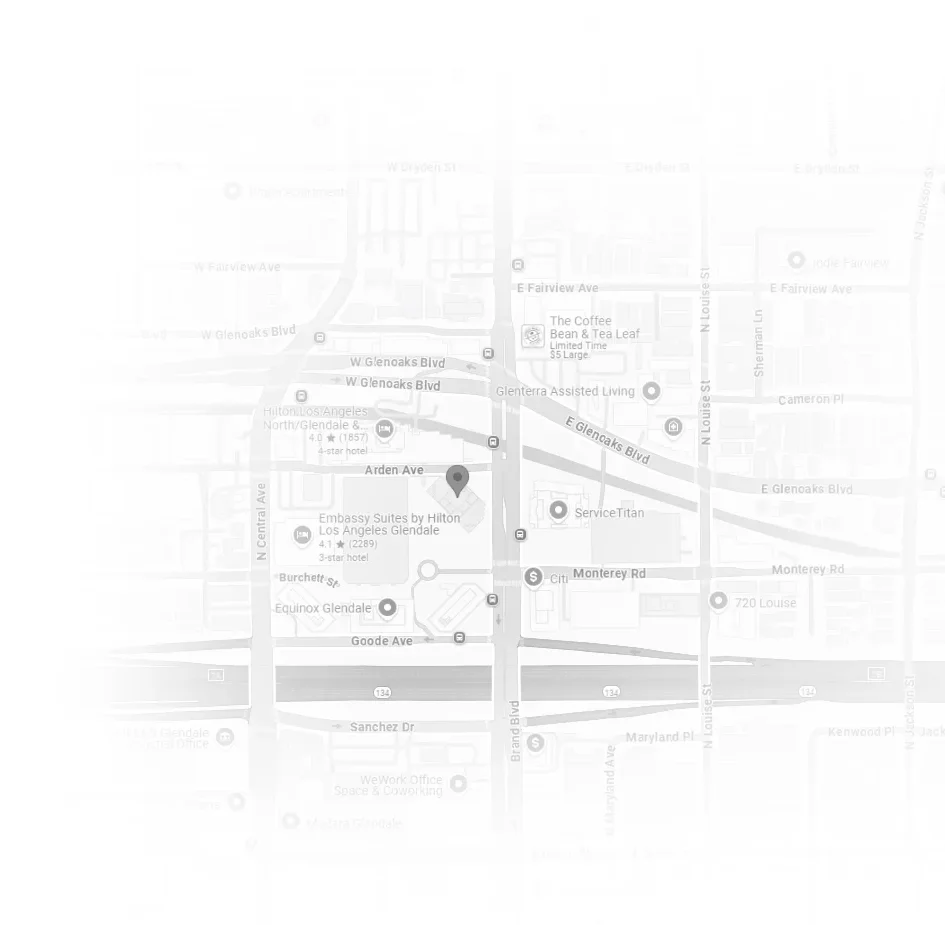
Contact the experience team of attorneys of Haig B. Kazandjian Lawyers APC today. We proudly serve clients across California. Visit us at our Glendale office at:
Haig B. Kazandjian Lawyers APC
801 N. Brand Blvd., Suite 1015,
Glendale, CA 91203
Phone: (818) 696 2306