California Law Prohibits Ethnicity-Based Employment Discrimination

California and federal employment laws protect workers from discrimination based on ethnicity, ancestry, and cultural identity. This protection extends beyond race or national origin; it covers discrimination tied to ethnic characteristics, cultural practices, language, surname, accent, or association with a particular ethnic group.
Ethnicity discrimination occurs when an employer treats an employee or job applicant less favorably because of their ethnic background or perceived ethnic identity. This can take the form of hiring bias, unequal pay, denied promotions, workplace harassment, hostile treatment, or wrongful termination. The discrimination need not be overt. California courts recognize circumstantial evidence that demonstrates ethnic bias as the actual motive behind employment decisions.
Under the California Fair Employment and Housing Act (FEHA) and Title VII of the Civil Rights Act, employers with five or more employees cannot make employment decisions based on ethnicity, ancestry, or ethnic characteristics. This includes decisions about hiring, compensation, job assignments, training opportunities, promotions, benefits, or termination.
When employers violate these protections, California law provides workers with the right to pursue legal action and recover damages.
What Ethnicity Discrimination Looks Like in California Workplaces
Ethnicity discrimination takes many forms in the workplace. Employers rarely announce discriminatory intent. The bias typically appears through patterns of treatment, disparate outcomes, and hostile conduct directed at employees from specific ethnic backgrounds.
The evidence often lies in comparing how similarly situated employees from different ethnic groups are treated under the same circumstances.
Hiring Discrimination Based on Ethnicity
An employer cannot refuse to hire, interview, or consider a candidate because of their ethnic background. Hiring discrimination can include screening out applicants with ethnic surnames, rejecting candidates based on accent or appearance associated with a particular ethnicity, or using interview questions designed to identify and exclude applicants from certain ethnic groups.
When an employer systematically hires employees from one ethnic background while excluding equally or more qualified candidates from another, the pattern supports a discrimination claim even without direct statements of bias.
Ethnic Harassment and Hostile Work Environment

Workplace harassment based on ethnicity includes ethnic slurs, derogatory comments about cultural practices, jokes targeting someone’s accent or ethnic background, or displaying offensive symbols or images associated with ethnic stereotypes. Harassment can be verbal, physical, or visual.
When this conduct is severe or pervasive enough to create a hostile, intimidating, or offensive work environment, it violates FEHA and Title VII. The law does not require the harassment to come from a supervisor. Co-worker harassment that management knows about and fails to stop also creates employer liability.
Unequal Pay and Compensation Disparities
Paying employees from one ethnic background less than employees from another ethnic background for substantially similar work is compensation discrimination. It includes base salary, bonuses, commissions, overtime opportunities, and benefits.
California’s Equal Pay Act reinforces this protection by requiring employers to justify any pay differential with legitimate, non-discriminatory business reasons. When pay disparities align with ethnic demographics and no legitimate explanation exists, the pattern constitutes evidence of discriminatory compensation practices.
Promotion Denials and Career Advancement Barriers
An employer cannot pass over qualified employees for promotion because of their ethnicity. Promotion discrimination often manifests as a glass ceiling. Employees from certain ethnic backgrounds advance to entry and mid-level positions but are systematically excluded from senior roles or leadership opportunities. When promotion decisions consistently favor one ethnic group over equally qualified candidates from another, the pattern supports an inference of discrimination even without explicit statements of bias.
Wrongful Termination Due to Ethnic Background
Terminating an employee because of their ethnicity violates California law regardless of the employer’s stated reason. Termination discrimination cases typically turn on timing, documentation patterns, and comparative treatment.
When an employer suddenly documents performance concerns for an employee from a particular ethnic background shortly after a workplace conflict involving ethnic bias, or when the employer terminates employees from one ethnic group at higher rates than similarly situated employees from other groups, the evidence supports a wrongful termination claim grounded in ethnicity discrimination.
Retaliation for Reporting Ethnicity-Based Discrimination
An employer cannot punish an employee for reporting ethnicity discrimination, filing a complaint with HR or the California Civil Rights Department, or participating in an investigation. Retaliation can include termination, demotion, pay cuts, schedule changes, or hostile treatment following the protected activity.
Retaliation claims are independently actionable under FEHA, meaning an employee can prevail on a retaliation claim even if the underlying discrimination complaint is not sustained.
California and Federal Laws Protecting Against Ethnicity Discrimination
Workers in California are protected by overlapping state and federal laws that prohibit ethnicity-based employment discrimination. These statutes define who is covered, what conduct is prohibited, and what remedies are available when violations occur.
Title VII of the Civil Rights Act of 1964
Title VII is the federal law prohibiting employment discrimination based on race, color, religion, sex, and national origin. Ethnicity discrimination claims under Title VII typically fall under the national origin or race provisions, as federal law does not separately define ethnicity as a protected category. However, courts interpret “national origin” broadly to include ethnicity, ancestry, and ethnic characteristics.
Title VII applies to employers with 15 or more employees and covers all aspects of employment:
- Hiring
- Firing
- Compensation
- Promotion
- Training
- Terms and conditions of employment
Employees must file a charge with the Equal Employment Opportunity Commission (EEOC) before bringing a Title VII lawsuit in federal court.
California Fair Employment and Housing Act (FEHA)

FEHA provides broader protection than federal law. Under FEHA, employers with five or more employees cannot discriminate based on race, color, ancestry, national origin, or ethnicity. California law explicitly recognizes ethnicity and ancestry as distinct protected categories, which means employees do not need to fit their claim into “race” or “national origin” frameworks.
FEHA applies to all employment decisions and prohibits both disparate treatment (intentional discrimination) and disparate impact (policies that disproportionately harm employees from certain ethnic groups without business justification). Employees file FEHA complaints with the California Civil Rights Department (CRD) before pursuing a lawsuit.
Who Is Covered: Employer Size Requirements
FEHA applies to employers with five or more full-time or part-time employees. This lower threshold means more California workers are protected under state law than under federal law, which requires 15 employees for Title VII coverage. The five-employee count includes all employees, not just those in California, if the employer operates in multiple states.
Protected Characteristics: Ethnicity, Ancestry, and Cultural Identity
California law protects employees from discrimination based on ethnicity (identification with a cultural or ethnic group), ancestry (lineage or descent), and characteristics associated with ethnicity, such as accent, surname, traditional dress, or grooming practices tied to ethnic identity.
This protection extends to perceived ethnicity. An employer cannot discriminate based on the belief that an employee belongs to a particular ethnic group, even if the employer’s perception is incorrect. The law also prohibits discrimination based on association, like treating an employee unfavorably because they are married to or associated with someone from a particular ethnic background.
How Ethnicity Discrimination Differs from Race and National Origin Claims
Ethnicity discrimination overlaps with race and national origin discrimination, but California law treats ethnicity as a separate protected category under FEHA. Understanding the distinctions matters for case strategy, evidence presentation, and which legal standards apply.
Race
Race refers to broad classifications based on physical characteristics such as skin color, facial features, and hair texture. Race discrimination claims typically involve treatment based on membership in a recognized racial group, such as Black, White, Asian, Native American, and Pacific Islander.
National Origin
The country or region where a person or their ancestors were born is their national origin. Discrimination on the basis of national origin includes bias based on birthplace, citizenship status, accent, or immigration history. It also covers discrimination against employees because they appear to be from a particular country or speak a language associated with a specific national origin.
Ethnicity
Ethnicity refers to cultural identity, heritage, and membership in a group sharing common traditions, language, religion, or ancestry, even when that group does not align neatly with racial or national origin categories.
Ethnicity discrimination can involve bias against employees who identify as Hispanic, Latino, Jewish, Arab, Persian, Armenian, Filipino, or other ethnic identities that may not correspond to traditional race classifications or a single national origin.
Why the Distinction Matters
Some employment discrimination situations are more accurately framed as ethnicity discrimination than race or national origin discrimination. For example, an employer who harasses an employee for speaking Spanish at work is discriminating based on ethnicity and national origin, not race, since Hispanic individuals can belong to any racial category.
An employer who refuses to promote employees of Armenian descent while favoring employees of other ethnic backgrounds within the same racial classification (White or Caucasian) is engaging in ethnicity discrimination that may not fit clearly into race-based frameworks.
California law’s recognition of ethnicity as a distinct protected category allows employees to frame their claims accurately without forcing them into legal categories that do not capture the actual bias they experienced.
Building a Strong Ethnicity Discrimination Case in California
Proving ethnicity discrimination requires evidence that shows the employer’s stated reason for an adverse employment action was pretextual and that the actual reason was the employee’s ethnic background.
California courts recognize both direct evidence and circumstantial evidence of discriminatory motive. Most cases rely on circumstantial evidence, which can include patterns of treatment, timing, inconsistencies in the employer’s explanation, and comparative evidence showing that similarly situated employees from different ethnic backgrounds were treated more favorably.
Documenting Evidence of Discriminatory Treatment
Contemporaneous documentation strengthens ethnicity discrimination claims. Relevant evidence includes emails, text messages, performance reviews, disciplinary records, promotion decisions, pay records, and witness statements.
Employees should preserve communications that reflect ethnic bias, including comments, jokes, or complaints about ethnic characteristics, language use, or cultural practices. Performance evaluations created before and after incidents involving ethnic bias provide comparison points that reveal whether the employer’s narrative changed after the discriminatory conduct occurred.
If possible, employees should document the timing of adverse actions relative to complaints about ethnicity-based harassment or requests for accommodation related to cultural or religious practices tied to ethnic identity.
Direct Evidence vs. Circumstantial Evidence
Direct evidence of ethnicity discrimination includes explicit statements, emails, or recorded comments showing that the employer’s decision was motivated by the employee’s ethnic background. Examples include a supervisor stating that they prefer not to promote employees from a particular ethnic group, or an email referencing ethnic stereotypes as the reason for denying a job opportunity.
Circumstantial evidence includes patterns of treatment, timing, and statistical disparities that support an inference of discrimination. Circumstantial evidence can include:
- An employer terminating employees from one ethnic background at higher rates than employees from other groups.
- Sudden documentation of performance issues following a complaint about ethnic harassment.
- A promotion going to a less qualified candidate from the supervisor’s own ethnic background.
- Workplace policies that disproportionately affect employees from certain ethnic groups without a business justification.
California courts treat strong circumstantial evidence as sufficient to establish a prima facie case of discrimination, which shifts the burden to the employer to provide a legitimate, non-discriminatory explanation.
Witness Statements and Corroborating Documentation
Co-workers who observed discriminatory conduct or heard discriminatory statements can provide witness testimony. Witnesses need not belong to the same ethnic group as the employee who experienced discrimination. Observers from any background can corroborate the conduct.
Witness statements are particularly strong when they describe a pattern of ethnic bias rather than a single incident, or when they confirm that the employer’s stated reason for an adverse action contradicts what the witness observed or heard at the time.
The Role of Employer Policies and Pattern Evidence
Policies that disproportionately harm employees from certain ethnic backgrounds can support disparate impact claims. For example, a blanket policy prohibiting employees from speaking any language other than English in the workplace, even during breaks, disproportionately affects employees from ethnic backgrounds where English is not the primary language. If the employer cannot show that the policy is job-related and consistent with business necessity, the policy violates FEHA.
Pattern evidence showing that the employer consistently treats employees from one ethnic group less favorably than employees from other groups supports systemic discrimination claims even when no single employment decision would appear discriminatory in isolation.
Filing an Ethnicity Discrimination Claim in California

California employees must exhaust administrative remedies before filing a lawsuit for ethnicity discrimination. This means filing a complaint with a government agency and obtaining the right to sue before proceeding to court. The agency you file with and the timing of your filing affect which remedies are available and how long you have to pursue your claim.
Filing with the California Civil Rights Department (CRD)
The California Civil Rights Department (CRD), formerly the Department of Fair Employment and Housing, enforces FEHA. Employees can file complaints online or by mail, describing the discriminatory conduct and identifying the employer. The CRD investigates by requesting documents from the employer, interviewing witnesses, and attempting to mediate a settlement.
If the CRD determines there is sufficient evidence of discrimination, it may file a lawsuit on behalf of the employee or issue a right-to-sue notice allowing the employee to file their own lawsuit in state court. The CRD can also issue an immediate right-to-sue notice without conducting a full investigation if the employee requests it.
Filing with the CRD is required before filing a FEHA lawsuit in California state court. The filing deadline is three years from the date of the discriminatory act. This longer statute of limitations is one reason many California employees choose to file with the CRD rather than the EEOC.
Filing with the Equal Employment Opportunity Commission (EEOC)
The Equal Employment Opportunity Commission (EEOC) enforces federal employment discrimination laws, including Title VII. Employees file a charge with the EEOC, which investigates and may attempt conciliation. If the EEOC does not file a lawsuit on the employee’s behalf, it issues a right-to-sue letter allowing the employee to file a lawsuit in federal court.
Filing with the EEOC is required before filing a Title VII lawsuit in federal court. The EEOC filing deadline is 300 days from the discriminatory act in states with their own fair employment agencies (such as California), or 180 days in states without such agencies.
California has a work-sharing agreement between the CRD and the EEOC, which means a complaint filed with one agency is automatically cross-filed with the other. This preserves claims under both state and federal law without requiring separate filings. However, filing with the CRD first provides the advantage of California’s longer three-year statute of limitations.
Understanding the “Right to Sue” Notice
A right-to-sue notice is a letter issued by the CRD or EEOC stating that the employee may now file a lawsuit. The notice does not necessarily mean the agency found discrimination. It simply means the administrative process is complete and that the employee may proceed to court.
After receiving a CRD right-to-sue notice, the employee has one year to file a lawsuit in California state court. After receiving an EEOC right-to-sue letter, the employee has 90 days to file a lawsuit in federal court.
Statute of Limitations: How Long You Have to File Against Private Entities
The statute of limitations is the deadline for filing a complaint or lawsuit. Missing the deadline eliminates your right to sue regardless of the strength of your case.
| Claim Type | Filing Deadline |
|---|---|
| FEHA complaint with CRD | 3 years from the discriminatory act |
| Title VII charge with EEOC | 300 days from the discriminatory act (in California) |
| Lawsuit after CRD right-to-sue notice | 1 year from the notice date |
| Lawsuit after EEOC right-to-sue letter | 90 days from the letter date |
Contact an attorney before filing with any agency. The agency you file with affects the statute of limitations, available remedies, and procedural requirements. Strategic filing decisions made at the outset of a case can preserve maximum recovery options.
Damages and Compensation for Ethnicity Discrimination Victims
California law provides multiple categories of damages for employees who prove ethnicity discrimination. The goal is to restore the employee to the position they would have been in had the discrimination not occurred and, in cases of egregious conduct, punish the employer to deter future violations.
Lost Wages, Back Pay, and Front Pay Recovery
Economic damages include all compensation lost as a result of the discrimination. Back pay covers wages, bonuses, commissions, and the value of benefits (health insurance, retirement contributions, stock options) from the date of the discriminatory act through the resolution of the case.
Front pay compensates for future lost earnings when reinstatement is not feasible or when the employee’s career trajectory was permanently harmed by the discrimination. Courts calculate front pay by estimating what the employee would have earned in the position they were denied or from which they were wrongfully terminated, minus what they are likely to earn in their current or anticipated position. California law does not cap economic damages in employment discrimination cases.
Emotional Distress and Mental Suffering Damages
FEHA allows recovery for the psychological harm caused by ethnicity discrimination, including anxiety, depression, humiliation, loss of self-esteem, and damage to professional reputation. Emotional distress damages are not tied to economic loss; an employee can recover substantial emotional distress damages even if they found comparable employment quickly and suffered minimal economic harm.
California courts recognize that discrimination inflicts dignitary harm that extends beyond financial loss. There is no statutory cap on emotional distress damages in FEHA cases, unlike federal Title VII cases, where compensatory damages are capped based on employer size.
Punitive Damages Against Discriminatory Employers
Punitive damages are available under FEHA when the employer acted with malice, oppression, or fraud. Malice means conduct intended to cause injury or despicable conduct carried on with willful and conscious disregard for the rights of others. Oppression means despicable conduct that subjects a person to cruel and unjust hardship in conscious disregard of that person’s rights.
Punitive damages are designed to punish the employer and deter similar conduct in the future. California juries have awarded punitive damages in ethnicity discrimination cases where supervisors or managers knew about discriminatory harassment and either participated in it or failed to stop it despite complaints.
Reinstatement, Promotion, and Equitable Remedies
Equitable remedies are non-monetary remedies designed to restore the employee to the position they would have occupied absent the discrimination. Courts can order:
- Reinstatement to the employee’s former job
- Promotion to the position they were denied
- Expungement of negative performance reviews or disciplinary records created in retaliation for complaints
- Implementation of anti-discrimination training and policy changes
In practice, most employees in ethnicity discrimination cases prefer compensation over reinstatement. Few employees want to return to a workplace where they experienced discrimination. However, equitable remedies remain available when appropriate.
Attorney Fees and Legal Cost Recovery
Under FEHA, prevailing employees recover attorney fees and costs from the employer. This fee-shifting provision ensures that employees can afford to bring discrimination claims even when the economic damages are modest.
Attorney fees are typically calculated based on the attorney’s hourly rate multiplied by the hours reasonably spent on the case. They can exceed the damages recovered by the employee.
California courts also award compensation for filing fees, deposition costs, expert witness fees, and other litigation expenses. Fee recovery under FEHA does not require that the employee win on every claim. Partial success on FEHA claims can still support a fee award.
How HBK Lawyers Fights Ethnicity Discrimination in Glendale

We Identify Patterns Employers Try to Conceal
Ethnicity discrimination cases rarely hinge on a single event. The evidence lies in patterns — how the employer treated other employees from the same ethnic background, whether documentation of performance issues appeared only after complaints about ethnic bias, and whether policies that appear neutral in theory disproportionately harm employees from certain ethnic groups in practice.
We reconstruct timelines, analyze personnel records, compare treatment across demographic groups, and examine the employer’s stated rationale against the full record of events. That work happens before we file, not after.
Over 50 Years of Combined Experience in California Employment Law
HBK Lawyers has litigated employment discrimination claims throughout Los Angeles County, Riverside County, San Diego County, Santa Barbara County, and San Francisco County.
Our attorneys understand FEHA and Title VII, the procedural requirements for filing with the CRD and EEOC, and the evidentiary standards California courts apply to discrimination claims. We know what evidence matters, how to obtain it through discovery, and how to present it effectively at mediation or trial.
$100 Million Recovered for California Workers
Our firm has recovered over $100 million on behalf of employees in wage and hour, discrimination, harassment, and wrongful termination cases. The results we achieve reflect case selection, preparation, and the willingness to litigate when settlement offers do not reflect the full value of the claim.
Contingency Fee Representation: No Fees Unless We Win
All ethnicity discrimination cases are handled on a contingency fee basis. You pay no retainer, no hourly fees, and no upfront costs. If we do not recover compensation on your behalf, you owe nothing. Our fee is a percentage of the recovery. We succeed only when you succeed.
Full Legal Services in Spanish
HBK Lawyers provides complete representation in Spanish at every stage of the case. Clients who communicate primarily in Spanish receive direct attorney representation — not translated summaries or reliance on interpreters for substantive legal discussions.
Our Spanish-speaking attorneys handle intake, case investigation, agency filings, discovery, settlement negotiations, and trial preparation entirely in Spanish when that is the client’s preference.
Serving Los Angeles, Riverside, San Diego, Santa Barbara, and San Francisco Counties
We represent employees throughout Southern and Central California and are familiar with local laws and judges. We handle ethnicity discrimination cases in state and federal courts and have experience litigating against large employers with in-house legal departments and outside counsel.
Case Results

$3,600,000
$2,800,000
$1,500,000
$1,260,000
$1,500,000
Meet Our Team










Serving Employees Across Southern California
HBK Lawyers represents employees in ethnicity discrimination cases throughout Los Angeles County, Riverside County, San Diego County, Santa Barbara County, and San Francisco County, including Glendale, Encino, Burbank, Pasadena, Van Nuys, Long Beach, Riverside, San Bernardino, San Diego, Santa Barbara, and surrounding communities.
Glendale office
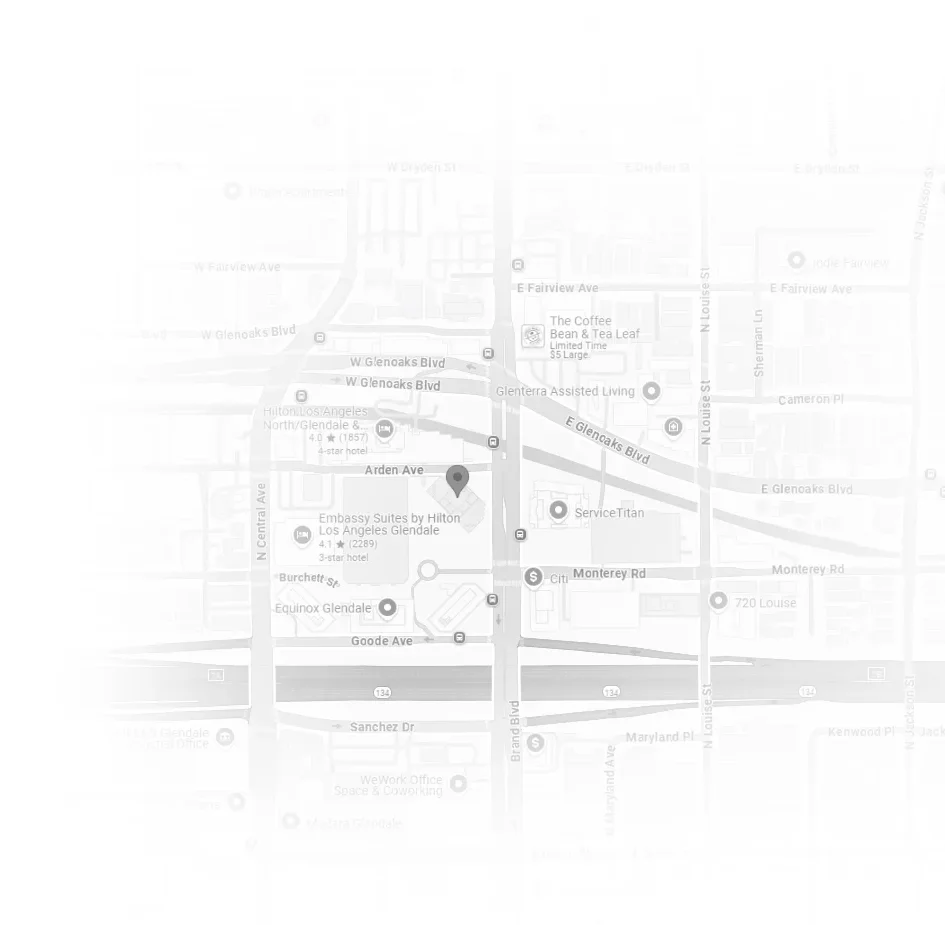
801 N. Brand Blvd., Suite 1015, Glendale, CA 91203
Phone: (818) 696 2306
Encino office
16000 Ventura Blvd., Suite 780 Encino, CA 91436
Phone: (818) 696 2306
Frequently Asked Questions
What makes ethnicity discrimination different from race discrimination?
Ethnicity refers to cultural identity, heritage, and membership in a group sharing common traditions, language, or ancestry. Race refers to broader classifications based on physical characteristics.
California law treats ethnicity as a distinct, protected category, which means employees can bring ethnicity discrimination claims without fitting their experience into race or national origin frameworks.
Can I be discriminated against based on my spouse’s ethnicity?
California law prohibits discrimination based on association with someone from a particular ethnic background. If your employer treats you unfavorably because you are married to or associated with someone from a certain ethnic group, that is ethnicity discrimination under FEHA.
What if my employer claims the decision was based on performance?
Performance rationales are the most common defense in ethnicity discrimination cases. The analysis examines whether performance concerns were documented before incidents of ethnic bias occurred, whether similarly situated employees from other ethnic backgrounds with comparable or worse performance were treated more favorably, and whether the timing of performance documentation aligns with complaints about discrimination or harassment. Inconsistent documentation and disparate treatment are legally significant.
How do I prove ethnicity discrimination when there is no written evidence?
Most ethnicity discrimination cases rely on circumstantial evidence, such as patterns of treatment, timing, statistical evidence showing disparate outcomes across ethnic groups, and witness testimony.
You do not need emails or text messages explicitly stating discriminatory intent. Courts recognize that discrimination is rarely overt and that indirect evidence showing the employer’s stated reason was pretextual is sufficient to support a claim.
Can I be fired for speaking my native language at work?
California law limits when employers can impose English-only rules. A blanket prohibition on speaking languages other than English, even during conversations unrelated to job duties, can constitute ethnicity or national origin discrimination if the employer cannot show the policy is job-related and consistent with business necessity. If you were disciplined or terminated for speaking your native language, that may support a discrimination claim.
What is the deadline to file an ethnicity discrimination claim in California?
Three years from the discriminatory act to file a complaint with the California Civil Rights Department under FEHA. Deadlines are strict; missing the statute of limitations eliminates your right to sue, regardless of the strength of your case. Contact an attorney immediately to preserve your rights.
Does my employer need to have a certain number of employees for me to file a claim?
Under California’s Fair Employment and Housing Act (FEHA), your employer must have five or more employees. This lower threshold means more California workers are protected under state law than under federal Title VII, which requires 15 employees. The five-employee count includes all employees, regardless of location or full-time/part-time status.
Can I be retaliated against for reporting ethnicity discrimination?
No. FEHA prohibits retaliation against employees who report discrimination, file complaints with the CRD or EEOC, or participate in investigations. Retaliation can include termination, demotion, pay cuts, schedule changes, or hostile treatment. Retaliation claims are independently actionable, so you can prevail on a retaliation claim even if the underlying discrimination complaint is not sustained.
$3,600,000
$2,800,000
$1,500,000
$1,260,000
$1,500,000