Gender Discrimination in California Workplaces

Despite decades of legal action, gender discrimination continues to affect workers across countless industries in Los Angeles County.
It appears in pay disparities justified as “market rate adjustments”, promotions that consistently favor workers of one gender over equally qualified candidates, denied pregnancy accommodations, and workplace cultures that punish employees for failing to conform to gender stereotypes.
California law prohibits all of these acts. The Fair Employment and Housing Act (FEHA) provides some of the strongest workplace protections in the country, outlawing discrimination based on sex, gender, gender identity, gender expression, and pregnancy.
Title VII of the Civil Rights Act adds extra protection. When an employer makes decisions about hiring, pay, promotion, or termination based on gender rather than merit, the law provides clear remedies.
Gender discrimination cases are provable. Comparative evidence, or the ways that similar employees of different genders are treated, reveals patterns that the employer’s stated reasons often can’t explain. Pay records, promotion histories, and performance review timelines provide the factual foundation for these claims.
HBK Lawyers stands with employees throughout Glendale and Los Angeles County who have been subjected to gender-based treatment that violates California law.
How California Law Defines Gender Discrimination
Under California law, gender discrimination occurs when an employer treats an employee or job applicant differently or less favorably because of their sex, gender, gender identity, gender expression, or pregnancy.
The distinction between sex and gender is legally important. Sex refers to biological characteristics, while gender refers to the social and cultural attributes, behaviors, and expectations associated with being male, female, or nonbinary. California explicitly protects both.
FEHA prohibits discrimination in every aspect of employment, including hiring, compensation, job assignments, promotions, discipline, training opportunities, benefits, and termination.
The discrimination doesn’t need to be the sole reason for the adverse action, it only needs to be a substantial motivating factor. An employer who terminates a female employee citing performance issues may still be liable if gender bias contributed to the decision, even if there were also performance concerns.
Gender identity and gender expression are separately protected categories under California law. Gender identity refers to a person’s internal sense of their gender, which may or may not align with the sex they were assigned at birth. Gender expression, meanwhile, refers to how a person presents their gender through their appearance, clothing, behavior, or mannerisms.
Discrimination against transgender and nonbinary employees (including denial of bathroom access consistent with gender identity, refusal to use correct pronouns, or termination following gender transition) is a clear violation of FEHA.
Pregnancy discrimination is also categorized as gender discrimination because pregnancy is a condition unique to people assigned female at birth. Adverse treatment based on pregnancy, childbirth, breastfeeding, or related conditions qualifies as unlawful gender discrimination under both FEHA and the federal Pregnancy Discrimination Act.
What Gender Discrimination Looks Like in Glendale Workplaces

Gender discrimination takes many forms. Some are overt. Most aren’t.
Subtle discrimination tends to appear in patterns: women consistently receiving smaller raises than male colleagues in the same role, mothers being passed over for promotions while fathers aren’t, or workers who don’t conform to traditional gender presentation facing heightened scrutiny.
The following behaviors are all indicators of gender discrimination in California.
Unequal Pay for Equal Work
Paying employees of different genders differently for similar work is perhaps the clearest form of gender discrimination.
California’s Equal Pay Act requires employers to pay employees equally when the work performed requires “substantially similar” skill, effort, and responsibility under similar working conditions. The work doesn’t need to be identical, simply comparable.
Pay disparities are often justified as reflecting prior salary history, negotiation skill, or market rates. California law rejects these explanations when they perpetuate gender-based wage gaps.
An employer can’t defend a pay disparity by pointing to a female employee’s lower prior salary if that prior salary itself reflected discrimination. Similarly, paying women less because they negotiated less aggressively reinforces gender stereotypes about assertiveness and violates the Equal Pay Act.
Discriminatory Hiring and Promotion Practices
Gender discrimination frequently occurs at the hiring and promotion stages. Employers may assume that women with children will be less committed to their careers, that men are better suited for technical or leadership roles, or that employees who don’t conform to traditional gender presentation won’t fit the company culture.
Whether stated or implied, such assumptions violate FEHA when they result in the refusal to hire a qualified applicant or the denial of a promotion to a deserving employee.
Evidence in these cases is often comparative, focusing on which candidates were interviewed, who was selected, the selected candidate’s qualifications, and whether the rejected candidate had comparable or superior credentials. Courts also examine whether interview questions or hiring criteria disproportionately disadvantage one gender without being job-related.
Pregnancy and Maternity Discrimination

An employer can’t refuse to hire a pregnant applicant, terminate a pregnant employee, deny reasonable accommodations for pregnancy-related conditions, or retaliate against an employee for taking pregnancy disability leave or requesting breastfeeding accommodations.
California law requires employers to provide reasonable accommodations for employees affected by pregnancy, childbirth, or related medical states and conditions, including modified duties, temporary transfers to less strenuous work, or additional break time. Withholding these accommodations is direct evidence of pregnancy discrimination.
Adverse action following a pregnancy announcement or leave request is another potential sign. If an employee receives positive performance reviews before announcing their pregnancy, then suddenly faces criticism or termination after returning from leave, the courts may interpret such behavior as discriminatory.
Gender-Based Harassment and Hostile Work Environment
Gender-based harassment that creates a hostile work environment is another form of gender discrimination spelled out in FEHA.
Harassment doesn’t need to be sexual in nature. Comments denigrating women’s abilities, jokes about gender stereotypes, exclusion from meetings or client relationships based on gender, or hostile treatment toward employees who don’t conform to traditional gender presentation all contribute to a hostile work environment.
Pursuing a hostile work environment claim requires showing that the harassment was severe or pervasive enough to alter the conditions of employment. Isolated comments may not suffice, but a pattern of demeaning treatment may meet this standard, particularly when management knew or should have known about it and failed to act.
Retaliation for Reporting Gender Discrimination
An employer can’t take adverse action against an employee for reporting gender discrimination, filing a complaint with the California Civil Rights Department (CRD), participating in an investigation, or opposing discriminatory practices. Under FEHA, employees who experience retaliation after reporting gender discrimination can pursue both claims simultaneously.
Retaliation often follows a predictable pattern:
- The employee voices a complaint.
- The employer begins documenting performance concerns that they never raised before.
- The employer uses the documentation to justify termination weeks or months later.
Courts examine whether the alleged performance issues existed before the complaint and whether the timing suggests a retaliatory motive.
Protected Characteristics Under California Law
The Fair Employment and Housing Act shields employees from discrimination based on the following gender-related characteristics:
- Sex: Whether an employee is male, female, or intersex.
- Gender: The social and cultural attributes associated with being male, female, or nonbinary.
- Gender identity: A person’s internal sense of their gender, regardless of the sex they were assigned at birth.
- Gender expression: How an employee presents their gender through appearance, clothing, grooming, behavior, or mannerisms.
- Pregnancy and childbirth: Any medical condition, status, or set of needs related to pregnancy.
While technically a separate protected category under FEHA, sexual orientation discrimination and gender discrimination claims often overlap when the adverse treatment is based on the employee’s failure to conform to gender stereotypes.
Proving Gender Discrimination in Court

Proving gender discrimination requires showing that the employer’s stated reason for an adverse employment action was pretextual, and that the real reason was the employee’s gender. Few employers admit discriminatory intent. The evidence comes from comparative treatment, timing, documentation patterns, and statements revealing gender bias.
Comparative Evidence
The most powerful evidence in gender discrimination cases is comparative evidence showing that similarly situated employees of a different gender were treated more favorably. For example:
- A female employee is denied a promotion and told that her performance needs improvement, while a male employee with weaker performance reviews is promoted.
- A male employee receives a 5% annual raise, while a female employee in the same role with similar tenure and performance receives 2%–3%.
- A pregnant employee is fired for attendance issues that have previously been tolerated in non-pregnant employees.
Courts look at the qualifications, performance records, and disciplinary histories of comparable employees to determine whether the employer’s stated reason holds up or whether gender bias better explains the outcome.
Timing and Sequence
The timing of adverse actions relative to protected conduct, such as a pregnancy announcement, discrimination complaint, or request for gender-affirming accommodations, is legally significant.
An employee who receives consistently positive performance reviews before a gender transition and is then fired shortly afterward presents a timing pattern that suggests a discriminatory motive, even if the employer cites performance concerns.
Statements Revealing Bias
Direct statements revealing gender bias are rare but compelling when they exist. Examples include:
- Claims that women are “too emotional” for leadership positions.
- Speculation that a pregnant employee will be “distracted” or “not committed” after giving birth.
- Jokes or remarks about an employee’s failure to conform to gender stereotypes.
- Interview questions about family planning or childcare responsibilities asked only to female candidates.
Even when supervisors don’t make blatantly discriminatory statements, implicit bias can be demonstrated through patterns of conduct, such as assigning women to administrative tasks while assigning men to client-facing roles, excluding women from networking or development opportunities, or consistently promoting men over equally qualified women.
Statistical Disparities
In systemic discrimination cases involving multiple employees, statistical evidence can point to the fact that employees of one gender are regularly paid less, promoted less frequently, or terminated at higher rates, which can support an inference of discrimination.
This type of evidence is most commonly used in class-action cases or when the employer’s behavior spans multiple departments or job classifications.
Filing a Gender Discrimination Claim in California

Employees who experience gender discrimination have multiple options for taking legal action. Here are some of the courses available.
Filing a Complaint with the California Civil Rights Department
Most gender discrimination claims in California begin with a complaint filed with the California Civil Rights Department (formerly the Department of Fair Employment and Housing). The CRD investigates discrimination complaints, facilitates mediation between employers and employees, and issues “right to sue” notices that allow employees to file lawsuits in court.
The deadline to file a complaint with the CRD is three years from the date of the discriminatory act. This is considerably longer than the deadline under federal law and one reason that most California employees file under FEHA rather than Title VII.
After filing a complaint, the employee may:
- Participate in CRD mediation: The CRD offers mediation to resolve the complaint without litigation. Mediation is voluntary and non-binding.
- Wait for the CRD to investigate: Officials will review the complaint and determine whether there’s sufficient evidence to support a finding of discrimination.
- Request a right-to-sue notice: The employee can request a right-to-sue notice immediately, permitting them to file a lawsuit without waiting for the investigation to end.
Once the CRD issues a right-to-sue notice, the employee has one year to file a lawsuit in superior court.
Filing a Complaint with the Equal Employment Opportunity Commission
Employees in Glendale facing gender discrimination can also file a charge with the federal Equal Employment Opportunity Commission (EEOC). The EEOC enforces Title VII and investigates discrimination complaints involving employers with 15 or more employees.
The deadline to file with the EEOC is 300 days from the date of the discriminatory act when the employee also has the option to file under state law. Upon receiving the complaint, the agency will either investigate or issue a right-to-sue letter.
Most gender discrimination claims in California are filed with the CRD rather than the EEOC because California law offers stronger protections, applies to smaller employers, and allows for uncapped damages.
Filing a Lawsuit Directly in Court
In some cases, the employee can file a lawsuit in court without first filing an administrative complaint. This option is available for:
- Breach-of-contract claims involving an employment contract that prohibits gender discrimination.
- Violations of the Equal Pay Act, which don’t require filing with the CRD or EEOC before suing.
- Claims of wrongful termination in violation of public policy that are framed independently of FEHA.
Most gender discrimination cases involve a combination of claims requiring both administrative filings and court litigation, which is why the guidance of a qualified attorney is indispensable.
What You Can Recover in a Gender Discrimination Case

California law permits the recovery of multiple categories of damages in successful gender discrimination cases. Unlike federal law, FEHA doesn’t cap damages based on the size of the employer.
Economic Damages
Economic damages compensate the employee for the financial losses resulting from the discriminatory treatment, which may include:
- Back pay: All wages, bonuses, commissions, and benefits lost from the date of the discriminatory act through resolution of the case.
- Future lost earnings: Compensation for ongoing financial harm, including reduced earning capacity if the discrimination resulted in termination or demotion.
- Lost benefits: The value of health insurance, retirement contributions, stock options, and other benefits the employee would have otherwise received.
In gender discrimination cases, economic damages are calculated based on what the employee would have earned had the discrimination not occurred.
Emotional Distress Damages
Damages for emotional distress, the psychological harm that gender discrimination causes, are also available under FEHA. This includes anxiety, depression, humiliation, loss of self-esteem, and reputational damage. These awards can be substantial, particularly when the discrimination was prolonged or particularly egregious.
California doesn’t cap emotional-distress damages in FEHA cases. The amount awarded depends on the severity and duration of the harm, the evidence supporting it, and the credibility of the plaintiff’s testimony.
Punitive Damages
Punitive damages are available under FEHA when an employer acts with malice, oppression, or fraud. Proving malice requires showing that the employer intended to harm the employee or acted with willful and conscious disregard of their rights. Oppression involves conduct that ignores the employee’s rights and subjects them to unjust hardship.
Punitive damages are designed to punish the employer and deter similar conduct in the future. Courts have awarded punitive damages in gender discrimination cases where supervisors or executives knew about discriminatory conduct and failed to stop it, or where the employer retaliated against an employee for reporting discrimination.
Attorney Fees and Costs
Under FEHA, prevailing employees are entitled to recoup their attorney fees and litigation costs from the employer. These cases are typically handled on contingency, meaning the attorney is paid a percentage of the final recovery only if the case is successful.
Reinstatement
In some instances, a court may order the employer to reinstate the employee to their prior position. Reinstatement is more common in wrongful termination cases than in other types of gender discrimination claims. Understandably, most employees prefer financial compensation over going back to working for an employer that discriminated against them.
Why Choose HBK Lawyers?
Workers in Glendale, California, who are subjected to unfair treatment because of their sex or gender characteristics turn to HBK Lawyers to protect their rights. Here’s why.
Effective Evidence Gathering
Gender discrimination cases hinge on patterns of behavior. We carefully analyze the evidence that reveals what an employer’s written policies can’t hide, such as payroll data, promotion histories, performance review timelines, and disciplinary records.
More Than 50 Years of Combined Experience
Since 2011, HBK Lawyers has represented countless employees in gender discrimination cases across Los Angeles County, including matters involving unequal pay, pregnancy discrimination, and retaliation following discrimination complaints.
Founding attorney Haig B. Kazandjian has been named to Super Lawyers Rising Stars every year since 2017, reflecting his unrelenting dedication to his work in employment litigation.
$100 Million Recovered for California Workers
Our case results are a testament to what thorough preparation and aggressive representation can achieve. Gender discrimination cases involving substantial economic damages (particularly Equal Pay Act claims spanning multiple years) demand the involvement of attorneys who understand how to calculate damages accurately and argue for them persuasively. We do.
No Fees Unless We Win
We take all gender discrimination cases on a contingency basis. That means you’ll pay no upfront retainer, no hourly fees, and no litigation costs unless we recover compensation on your behalf.
Comprehensive Legal Services Available in Spanish
Clients who communicate primarily in Spanish receive direct attorney representation, not translated summaries or secondhand updates. Our talented team can effectively handle client consultations, document review, negotiations, and court proceedings in Spanish.
Case Results

$3,600,000
$2,800,000
$1,500,000
$1,260,000
$1,500,000
Meet Our Team










Serving Glendale and Los Angeles County
HBK Lawyers proudly represents employees throughout Los Angeles County, including Glendale, Encino, Burbank, Pasadena, Long Beach, and surrounding communities, as well as Riverside County, San Diego County, Santa Barbara County, and San Francisco County.
Glendale Office
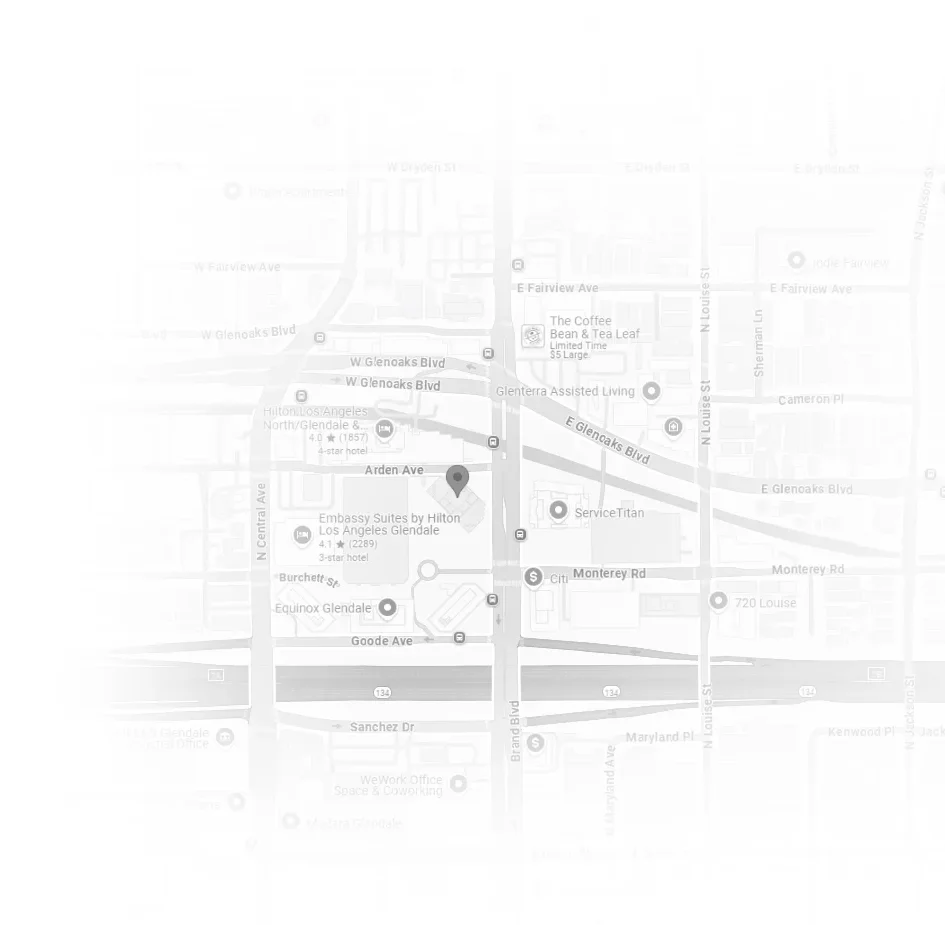
801 N. Brand Blvd., Suite 1015, Glendale, CA 91203
Phone: 818-696-2306
Encino Office
16000 Ventura Blvd., Suite 780, Encino, CA 91436
Phone: 818-696-2306
Frequently Asked Questions
What’s the difference between sex discrimination and gender discrimination?
Discrimination based on sex involves treating someone differently because they’re male, female, or intersex. By contrast, gender discrimination involves adverse treatment based on gender identity, gender expression, or failure to conform to gender stereotypes.
Does California law protect transgender employees?
Yes. FEHA explicitly prohibits discrimination based on gender identity and expression. This includes discrimination against transgender and nonbinary employees, denial of bathroom access consistent with gender identity, refusal to use correct names and pronouns, and termination following gender transition.
Can I sue for unequal pay if my employer says it’s based on experience?
Possibly. The Equal Pay Act requires employers to pay employees equally for substantially similar work unless the disparity is based on seniority, a merit system, a system that measures earnings by quantity or quality of production, or a bona fide factor other than sex, such as education or training. The employer must prove that the pay difference isn’t due to gender.
What if I was fired for complaining about gender discrimination?
Retaliation is independently prohibited under FEHA, meaning you can pursue both a gender discrimination claim for the underlying conduct and a retaliation claim for the termination. Retaliation claims are often easier to prove because the timing creates a strong inference of unlawful motive.
How long do I have to file a gender discrimination claim?
You have three years from the date of the discriminatory act to file a complaint with the California Civil Rights Department. For Equal Pay Act claims, the statute of limitations is generally two to three years, depending on whether the violation was willful. Once the CRD issues a right-to-sue notice, you’ll have one year to file a lawsuit in court.
Do I need to prove that my employer intended to discriminate?
No. You just need to prove that gender was a substantial motivating factor in the adverse decision, not that it was the only factor, and not that the employer consciously intended to discriminate. Circumstantial evidence like comparative treatment, timing, and statistical disparities can establish discrimination even without direct proof of intent.
Can men file gender discrimination claims?
Yes. FEHA protects all employees regardless of gender. Men who are paid less than female colleagues for substantially similar work, denied promotions because of gender stereotypes, or subjected to hostile work environments based on their gender have the same legal protections as women.
What if I signed an arbitration agreement?
Many employment contracts contain arbitration clauses requiring employees to resolve disputes through arbitration rather than in court. These agreements are generally enforceable in California, but they don’t eliminate your right to pursue a gender discrimination claim. A lawyer can evaluate whether such an agreement is enforceable and whether exceptions apply.
$3,600,000
$2,800,000
$1,500,000
$1,260,000
$1,500,000